

 Book An Appointment



When do we operate on partial UCL tears
Dr. Garcia does blog topics on “hot and new” topics in the community. See his monthly vlog videos below.
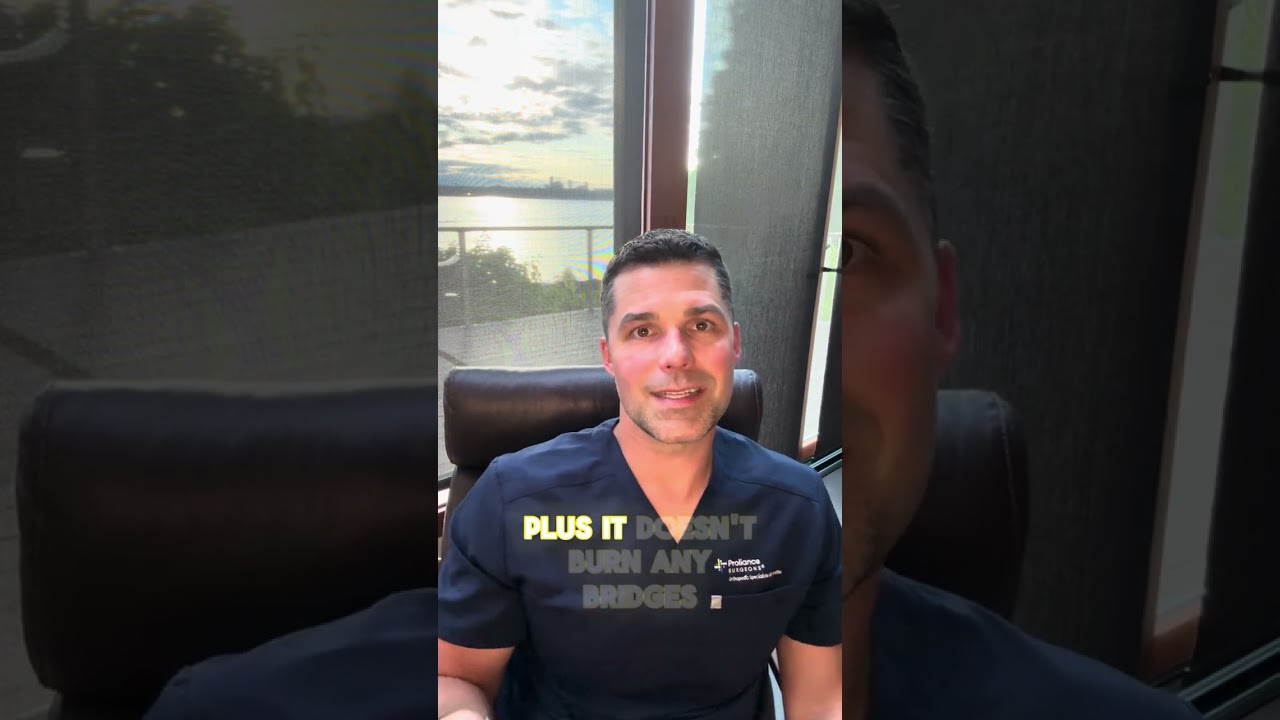
In this video, Dr. Grant H. Garcia focuses on the surgical treatment of partial ulnar collateral ligament (UCL) tears after non-surgical management has failed, highlighting how modern repair techniques have transformed sports medicine.
Here is a summary of the core medical insights he shares:
- The Paradigm Shift (Repairs vs. Reconstructions): Dr. Garcia emphasizes that primary UCL repairs have become an absolute game-changer for sports surgeons treating high-level overhead athletes and throwers. While traditional full ligament reconstructions (Tommy John surgery) remain highly valuable, primary repairs have grown to be one of the most frequently performed procedures for partial tears in his practice.
- The Internal Brace Benefit: By surgically repairing the athlete's native tissue and augmenting it with an "internal brace" (a high-strength collagen-coated tape), surgeons achieve outcomes equivalent to a full reconstruction without having to completely rebuild the ligament from scratch.
- Preserving Future Options ("Not Burning Bridges"): A major advantage of modern UCL repair methods is that they leave the patient's anatomy in an excellent position should a future injury occur. Because the bone tunnels used in a repair are minimal, a revision surgery down the line is much easier to execute. Dr. Garcia notes that continuous surgical modifications and techniques coming down the medical pipeline are making these potential revisions even more streamlined.
- Accelerated Recovery Timeline: One of the most compelling reasons athletes favor a primary UCL repair is the expedited return-to-play timeline. A typical recovery plan aims for a return to competitive throwing in about five to six months. This is significantly faster than the traditional 12-to-18-month recovery required for a full Tommy John reconstruction, though timelines will still vary depending on the athlete's specific position and individual progress.