
 Book An Appointment


What about Latarjet and DTA
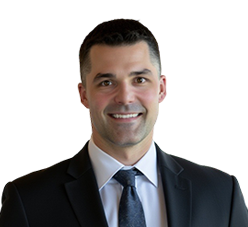
Dr. Garcia does blog topics on “hot and new” topics in the community. See his monthly vlog videos below.
In this video, Dr. Grant H. Garcia transitions into a discussion on advanced, open reconstructive procedures utilized when a patient has severe structural bone loss in the shoulder socket that cannot be treated with standard arthroscopic options.
Here is a summary of the core points he covers:
- When Open Bone Grafting is Required: If advanced imaging reveals that 20% or more of the shoulder socket bone (glenoid) has been completely worn away or lost due to chronic, recurrent dislocations, standard tissue-only repairs are no longer effective. Surgeons must then turn to advanced bone grafting procedures.
- The Latarjet Procedure: For cases reaching that 20% bone loss threshold, a common surgical option is the Latarjet procedure. This involves taking a piece of the patient's own coracoid bone (a small structure near the front of the shoulder), transferring it to the front of the damaged socket, and securing it into place to physically reconstruct the missing bone wall.
- The Distal Tibial Allograft (DTA): Dr. Garcia highlights DTA as an incredible alternative option, particularly for joint preservation. For even larger bony defects falling into the 25% to 30% range, surgeons graft a small piece of an ankle bone (distal tibia) from a donor. This is particularly advantageous for younger patients because the donor bone brings along a fresh cartilage surface to match the joint, adding massive stability and successfully reducing dislocation recurrence rates.
- A Complete Surgical Skillset: He emphasizes that any specialist handling complex shoulder instability must have all of these open, restorative procedures in their technical toolset. Dr. Garcia notes that using a streamlined system like Arthrex allows him to easily mobilize, adapt, and switch between these distinct, intricate bone-grafting techniques right in the operating room.