

 Book An Appointment



Check out Dr. Garcia blog on ACL graft options.
Dr. Garcia does blog topics on “hot and new” topics in the community. See his monthly vlog videos below.
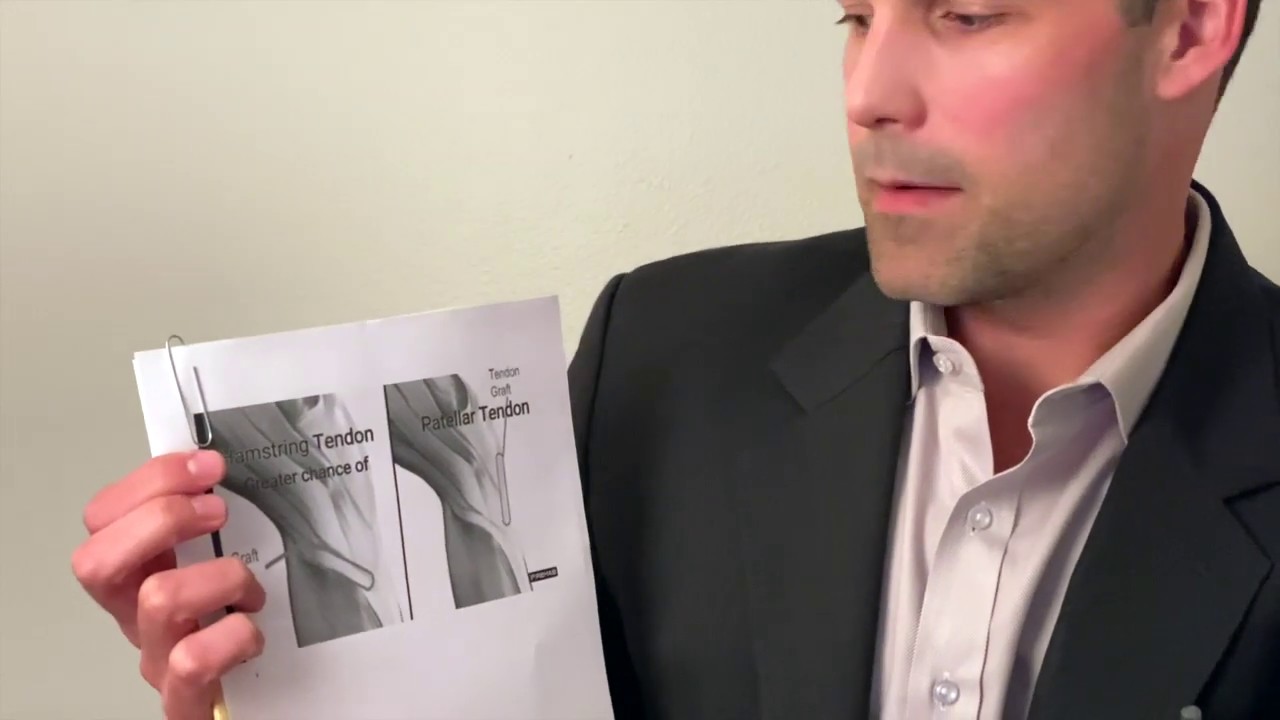
This video features orthopedic surgeon Dr. Grant H. Garcia from the Orthopedic Specialists of Seattle breaking down the different graft options used for ACL reconstruction surgery.
Here is a summary of the main topics discussed:
- Allograft (Cadaver) vs. Autograft (Own Tissue): Dr. Garcia explains that for patients over 35 years old, data shows cadaver grafts have similar re-tear rates to using a patient’s own tissue, offering an easier recovery without extra structural deficits. For patients under 35, autographs (using the patient's own tissue) are generally preferred.
- Patellar Tendon Autograft: Taken from the front of the knee with bone blocks on both sides, this is noted as the strongest option with the lowest re-tear rate (roughly 2% to 3%). It is highly recommended for elite athletes and high-impact cutting sports, though it carries a risk of persistent front knee or kneeling pain.
- Hamstring Tendon Autograft: Harvested from the inside of the leg, this is a popular option in the medical community because it is less technically complex. However, it has a 2% to 5% higher failure rate than the patellar tendon in high-level athletes. Dr. Garcia notes that surgeons can lower this failure rate by ensuring the graft size is larger than 8mm and using a newer technique called "internal bracing" (protecting the graft with a structural suture).
- Quadriceps Tendon Autograft: Taken from the upper portion connecting to the kneecap, this option acts as a middle ground between the patellar and hamstring grafts. It is robust like the patellar tendon but without the risk of kneeling pain. While it accounts for only a small percentage of ACL surgeries in the U.S. due to specialized training requirements, Dr. Garcia highlights it as an excellent choice for active patients who aren't ideal candidates for a patellar graft.
- Customized Decision Making: Ultimately, Dr. Garcia emphasizes that there is no one-size-fits-all answer. The ideal graft option depends heavily on a patient's age, specific sports or activity level, anatomy, and personal history of knee pain.