

 Book An Appointment


New Biceps Tenodesis with 360 labral repair
Dr. Garcia specializes in complex knee, shoulder and elbow sports surgeries. He has prepared a number of surgical videos below to help patients better understand their procedures. He is frequently updating his surgical video database so check back soon for further updates.
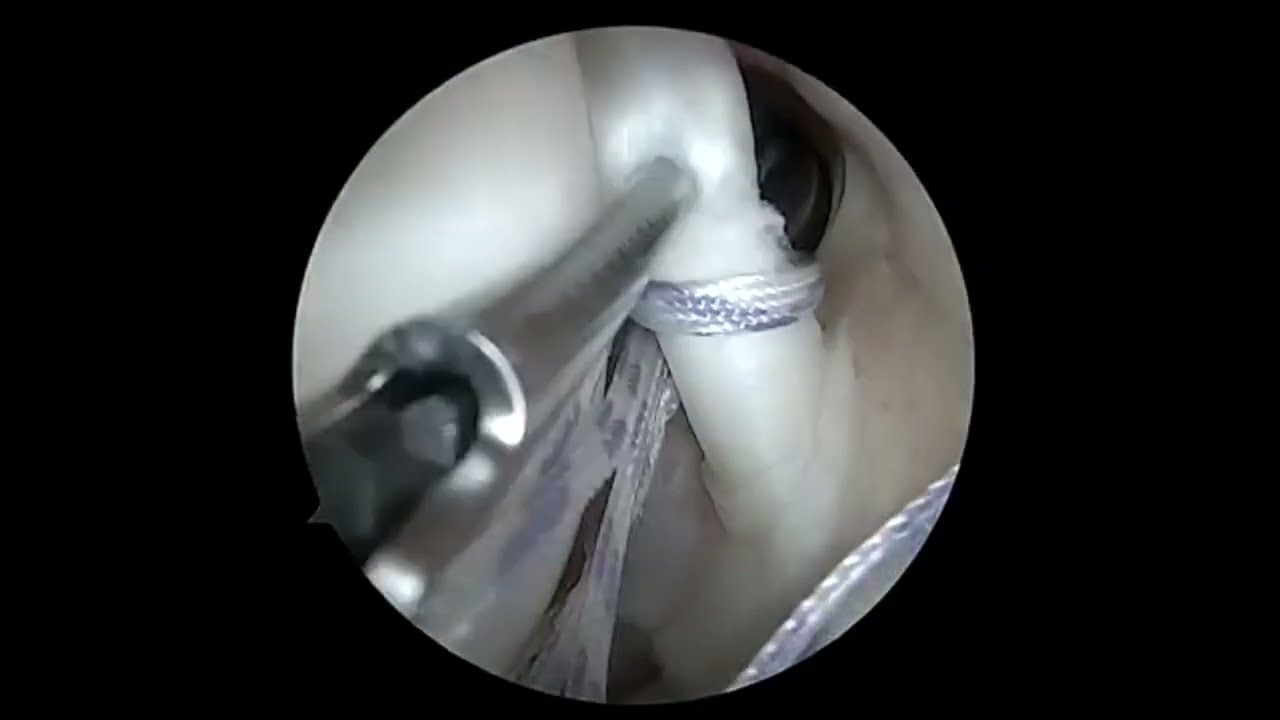
This video demonstrates Dr. Grant Garcia’s advanced arthroscopic technique for a biceps tenodesis paired with a comprehensive 360-degree circumferential labral repair. This combined procedure is highly indicated for young, active patients or overhead athletes suffering from global shoulder instability alongside severe, symptomatic pathology of the long head of the biceps tendon (LHBT), such as a high-grade SLAP tear that extends completely around the entire glenoid rim.
By relocating the biceps tendon out of the joint, Dr. Garcia eliminates a primary driver of deep shoulder pain and mechanical catching, while the 360-degree labral reconstruction establishes global structural stability.
The dual-reconstruction is executed through the following critical phases:
- Biceps Tenotomy & Excursion: Dr. Garcia begins by arthroscopically inspecting the joint, confirming a massive, circumferential labral tear. The long head of the biceps tendon is released from its native attachment point at the top of the socket (the supraglenoid tubercle). The tendon is then externalized or tagged so it can be re-anchored lower down outside the main joint wear-zone.
- Global Labral Mobilization (360 Degrees): Using specialized arthroscopic elevators, curved rasps, and tissue liberators, Dr. Garcia painstakingly dissects and frees the detached labrum completely around the entire clockface of the socket rim (anterior, inferior, posterior, and superior). This extensive mobilization is critical to allow the scarred-down, displaced cartilage to be shifted back upward to its native anatomical position.
- Circumferential Bone Bed Activation: A mechanical shaver and specialized curved rasps are used to abrade the bone along the entire perimeter of the glenoid rim. This creates a continuous, bleeding bone footprint, maximizing the biological potential for the labrum to fuse securely back to the bone.
- All-Knotless Sequential Stabilization: Moving systematically around the clockface, Dr. Garcia inserts a series of ultra-low-profile, high-strength knotless suture anchors (such as 1.8 mm FiberTack or PushLock constructs). Using a rotational suture lasso, he captures robust tissue bytes through the capsule and labrum, sequentially tensioning them down. This plicates the redundant capsule, reduces joint volume, and recreates a thick, uniform protective bumper all the way around the socket.
- Subpectoral or Suprapectoral Biceps Tenodesis: To finish the procedure, the previously released biceps tendon is retrieved and secured into a freshly drilled bone socket within the bicipital groove using a high-strength interference screw or tenodesis anchor. This maintains anatomical length and tension of the biceps muscle while permanently isolating it from the moving joint.
The final physical check confirms that the entire joint space has been tightly consolidated, the 360-degree labral bumper is perfectly elevated, and the biceps tendon is securely relocated—completely resolving global sliding and pain during overhead movement.