

 Book An Appointment



Lower Trapezius Transfer with Partial Cuff Repair
Dr. Garcia specializes in complex knee, shoulder and elbow sports surgeries. He has prepared a number of surgical videos below to help patients better understand their procedures. He is frequently updating his surgical video database so check back soon for further updates.
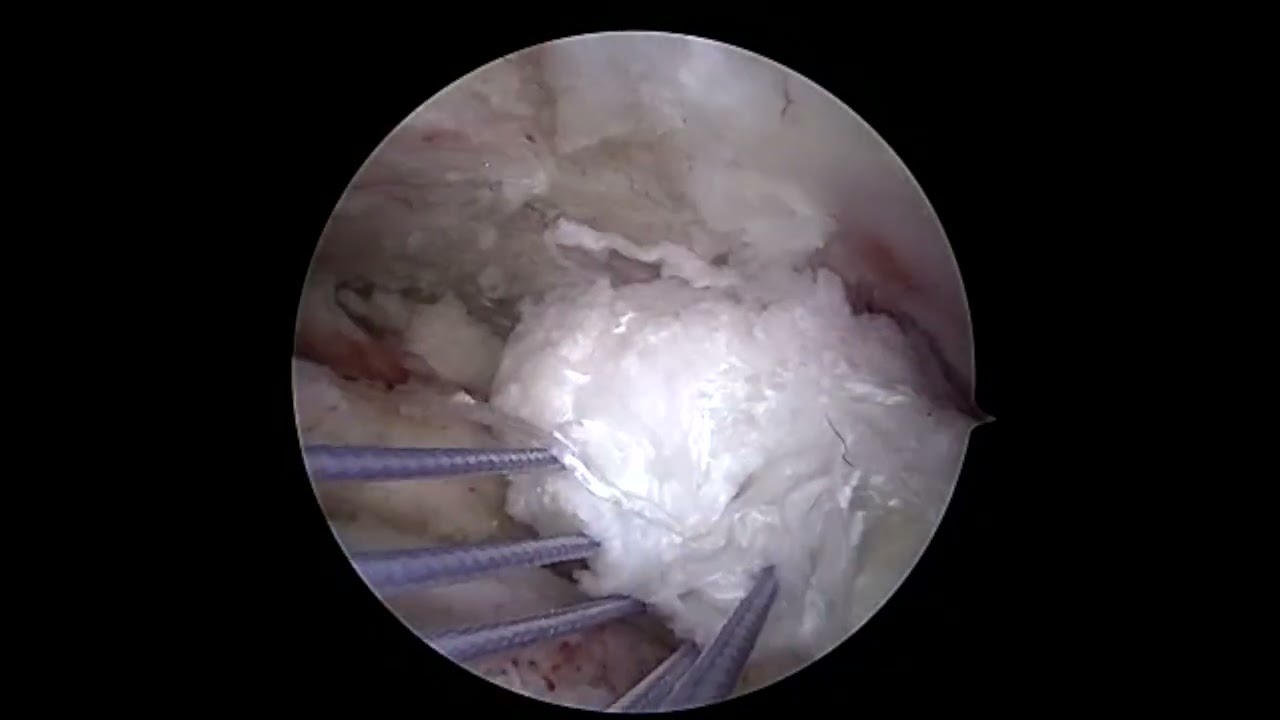
This video features Dr. Grant Garcia demonstrating his surgical technique for a lower trapezius transfer with a concurrent partial rotator cuff repair. This combined operation is typically indicated for patients presenting with massive, structurally compromised, or irreparable posterosuperior rotator cuff tears where a small portion of the remaining cuff can still be salvaged or closed, but the overall construct requires significant muscle-tendon transposition to restore baseline functional strength and external rotation power.
The procedure is executed through the following key steps:
- Joint Exploration and Partial Cuff Fixation: Dr. Garcia enters the subacromial space arthroscopically to evaluate the extent of the tissue damage. He identifies the salvageable portions of the rotator cuff tendon, mobilizes them, and performs a partial repair to secure them back down to the greater tuberosity footprint. This partially closes the structural defect and establishes a baseline layer of native soft tissue protection.
- Posterior Exposure and Lower Trapezius Isolation: Through an open posterior incision near the medial scapular border, Dr. Garcia carefully isolates the lower trapezius muscle belly. He detaches its tendonous base from the spine of the scapula while taking great care to protect the nearby infraspinatus muscle tissue. The native tendonous insertion is securely tagged with heavy sutures.
- Achilles Allograft Extension: Because the native lower trapezius tendon is too short to reach across the shoulder anatomy to the upper arm bone on its own, an Achilles tendon allograft is prepared on the back table using a Krakow whip-stitch technique. Dr. Garcia weaves and stitches this allograft directly to the isolated lower trapezius tendon under high tension, creating a robust, elongated muscle-tendon construct.
- Graft Tunneling and Humerus Anchor Fixation: The elongated graft is funneled underneath the posterior skin and deltoid muscle layers directly into the subacromial arthroscopic space. Dr. Garcia pulls the graft taut and anchors the Achilles tendon tail down onto the posterior-lateral aspect of the greater tuberosity using high-strength, knotless suture anchors.
The final physical assessment confirms that this living structural canopy successfully keeps the humeral head depressed in its native socket while aligning the vector of the lower trapezius muscle to act as a dynamic external rotator, replacing the function of the missing posterosuperior cuff tissue.