

 Book An Appointment


Largest MACI Arthro performed in the US
Dr. Garcia specializes in complex knee, shoulder and elbow sports surgeries. He has prepared a number of surgical videos below to help patients better understand their procedures. He is frequently updating his surgical video database so check back soon for further updates.
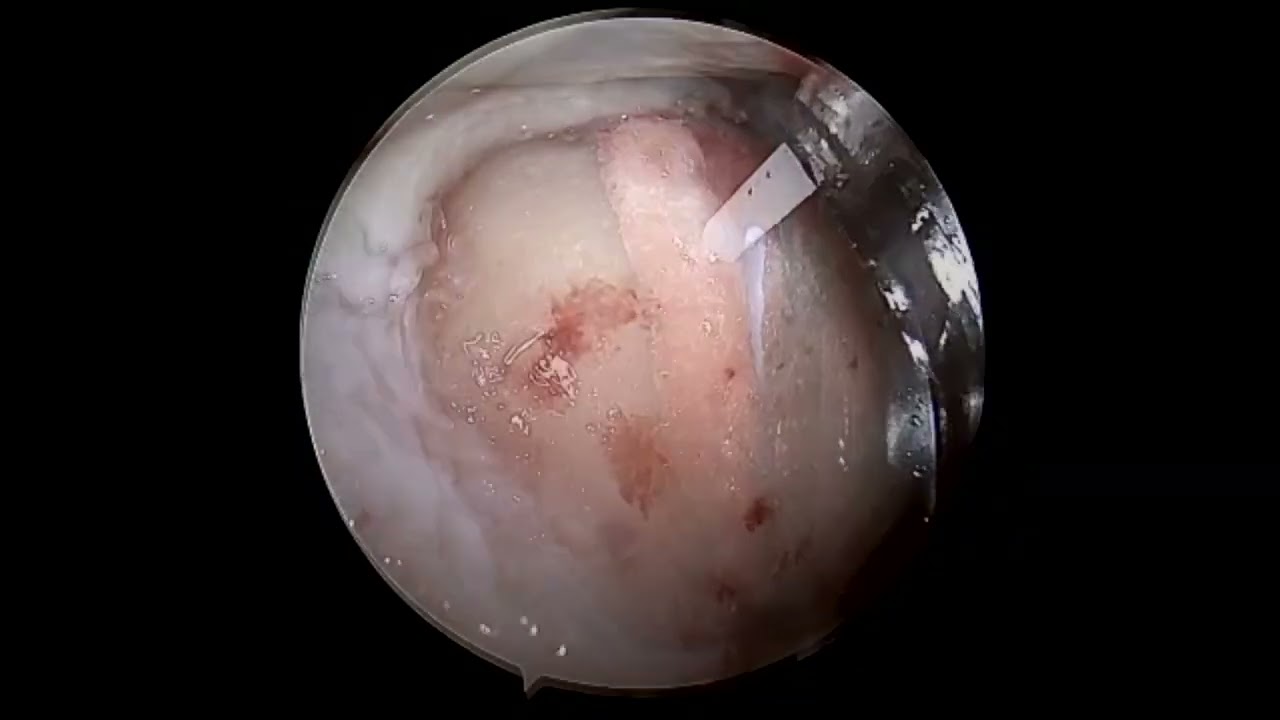
In this surgical video, Dr. Grant H. Garcia demonstrates an arthroscopic MACI (Matrix-induced Autologous Chondrocyte Implantation) procedure using the largest circular implant configuration deployed in the country to date. Managing a massive trochlear defect presents unique space constraints and technical hurdles compared to smaller graft cases.
The specialized surgical steps for this massive graft include:
- Portal Selection & Instrument Maneuvering: The procedure utilizes three access points: a medial portal, a lateral portal, and a central working portal. Due to the sheer size of the cartilage cutting guide, maneuvering it within the joint is difficult. Dr. Garcia notes that you must back up the cannula and pull the instrument into the knee gutters to successfully release, rotate, and align it.
- Meticulous Border Preparation: Preparation focuses heavily on the extreme top and bottom edges of the trochlear defect, which are the hardest to visualize and access—especially the side opposite the arthroscopic viewing portal. A circle cutting guide is driven into the cartilage to stamp the margins, followed by careful work with an ENT curette to clear the base. Because of the required working distance for a defect this size, the cannula is retracted further back than usual, meaning care must be taken to sweep away any protruding fat pad tissue before graft insertion.
- Hemostasis & Trajectory Checking: The cartilage cutter is introduced 3 to 4 times to verify perfectly flush margins, and the V-Shuttle delivery device is dry-run into the joint to perfect the insertion trajectory. With the tourniquet deflated, gel thrombin and fibrin sealant (Tisseel) are applied to the raw bony bed to achieve complete hemostasis, preventing any blood from pooling beneath the future implant.
- Segmental Graft Placement & Curing: Working in a dry environment with the tourniquet back up, the large matrix implant is delivered into the joint. Because of the graft's massive surface area, it cannot be fixed all at once. Dr. Garcia positions the top portion of the graft first, ensuring it is placed slightly high in the defect (as it is far easier to pull a graft down than push it up). The top section is allowed to dry and seal for 1 to 2 minutes with the knee extended before the knee is flexed to address, dry, and seal the bottom aspect of the matrix.
- Range of Motion Assessment: Once the entire implant is blanketed with a healthy layer of fibrin sealant, the knee is taken through flexion and extension. While some movement of the overlying, shiny sealant layer can be seen, the underlying massive MACI graft remains perfectly stable and contoured to the trochlea with zero edge lift or pull-off.