

 Book An Appointment


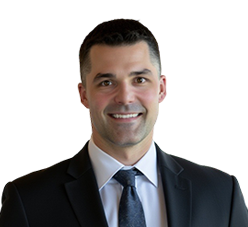
Dr. Garcia demonstrates his technique for Quad Tendon ACL reconstruction.
Dr. Garcia specializes in complex knee, shoulder and elbow sports surgeries. He has prepared a number of surgical videos below to help patients better understand their procedures. He is frequently updating his surgical video database so check back soon for further updates.

In this video, Dr. Grant H. Garcia demonstrates an ACL (anterior cruciate ligament) reconstruction procedure using a quadriceps tendon autograft and an internal brace.
The comprehensive surgical sequence is detailed below:
- Autograft Harvesting: Dr. Garcia makes a small superior incision over the knee along the line of the vastus medialis obliquus (VMO) muscle. He takes a partial thickness quadriceps tendon graft, approximately 10mm in width and 70–80mm in length, leaving a safe bridge of tissue behind for repair.
- Graft Preparation: On the back table, the harvested graft is secured using a specialized FiberTape TightRope device. It is sequentially stitched and tied into a single, high-strength biomechanical unit. The doctor marks the graft at the 20mm threshold to measure its depth inside the bone tunnel.
- Meniscus Repair: During arthroscopy, the surgeon identifies a chronic "ramp lesion" (a tear at the posterior horn attachment of the medial meniscus) with extensive joint mobility. He uses an RF probe to clean the area and fixes the tear back to the capsule with a Fast-Fix 360 suture system.
- Debridement & Anatomical Mapping: Dr. Garcia targets the chronic ACL tear. He removes the torn remnants while keeping the natural anatomical markers intact near the posterior cruciate ligament (PCL) to map out his bone tunnels perfectly.
- Femoral Tunnel Creation: Utilizing an accessory anteromedial portal, a guide pin is inserted at the isometric point between the ACL bundles. A 4.5mm reamer is drilled out through the lateral cortex to seat the fixation button. This is followed by a larger 10.5mm reamer drilled to a depth of 30mm for the graft socket.
- Tibial Tunnel Creation: Using an elbow guide at the tibial footprint, a sequential two-reaming technique (first a 7mm reamer, followed by a 10mm reamer) is used to establish the tibial pathway while minimizing the risk of generating a cyclops lesion (scar tissue blockage).
- Graft Shuttling & Internal Bracing: The prepared quad tendon graft is pulled up into the femoral socket until it hits the 20mm mark. An internal brace (composed of high-strength FiberTape) is arranged directly over the graft to back up and reinforce the soft tissue. The femoral flip-button is deployed and confirmed securely resting on the cortex.
- Final Fixation & Stability Checks: The knee is placed at 20 degrees of flexion. A PEEK interference screw (one size larger than the tunnel) is driven into the tibia to lock the graft. Dr. Garcia then taps a 4.75mm SwivelLock anchor into the tibia to ground the internal brace tapes, ensuring they are tensioned just enough to provide a supportive backup without over-constraining the joint. A final Lachman and anterior drawer test verify that excellent knee stability has been restored.