

 Book An Appointment



Dr. Garcia demonstrates his release technique for frozen shoulder
Dr. Garcia specializes in complex knee, shoulder and elbow sports surgeries. He has prepared a number of surgical videos below to help patients better understand their procedures. He is frequently updating his surgical video database so check back soon for further updates.
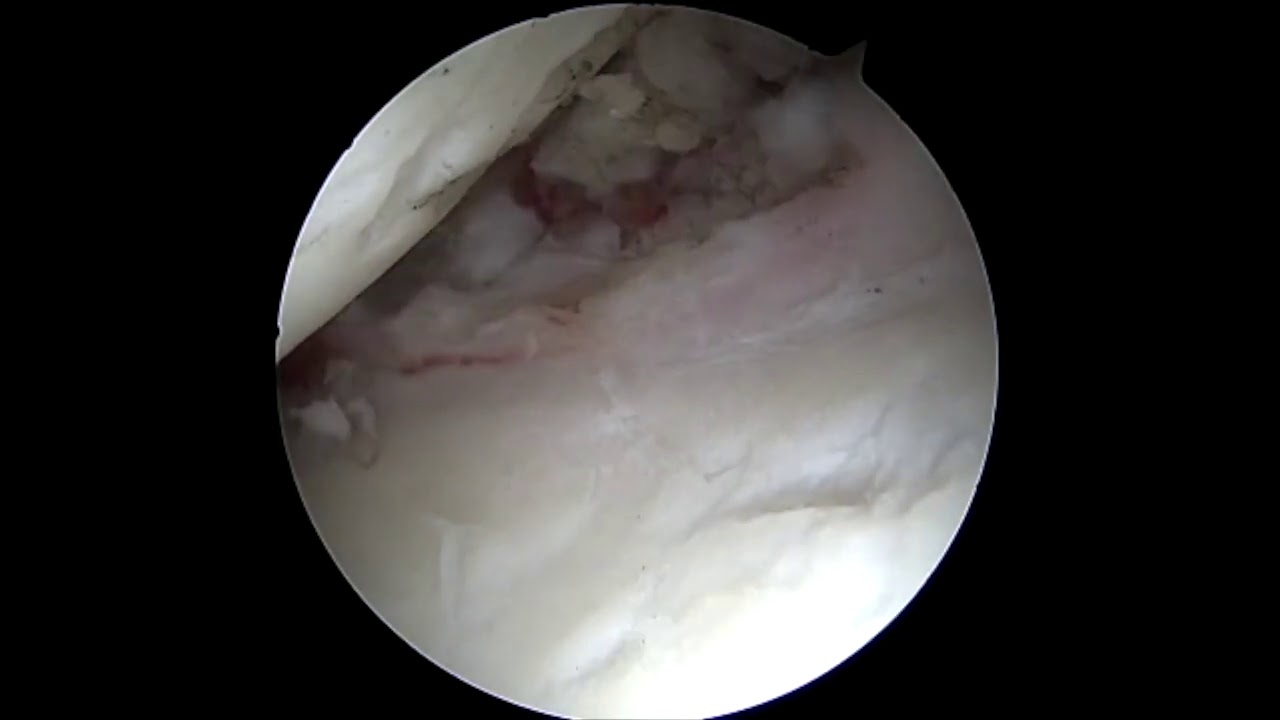

In this video, Dr. Grant Garcia demonstrates his precise technique for an arthroscopic capsular release to treat a severe case of frozen shoulder (adhesive capsulitis). Before the surgery, the patient had profound stiffness, with less than 10 degrees of internal/external rotation and less than 80 degrees of forward elevation.
Dr. Garcia pairs a controlled surgical cutting of the tight tissue with a gentle post-release manipulation under anesthesia (MUA) to safely restore full range of motion.
The demonstration outlines the following crucial phases of the procedure:
- Initial Joint Assessment: Upon entering the joint through an anterior portal, the space is exceptionally tight and heavily scarred compared to a normal shoulder. (In this case, a diseased long head of the biceps is also noted and sequentially managed with a standard biceps tenodesis).
- Rotator Interval and Superior Release: Using a radiofrequency (RF) wand, Dr. Garcia begins by carefully releasing the scarred rotator interval and superior capsule. He emphasizes a layer-by-layer dissection to cut only the thickened capsule while protecting the underlying muscle bellies of the rotator cuff.
- Patient Positioning: The procedure is performed with the patient in the lateral decubitus (side-lying) position. Dr. Garcia notes that clinical data demonstrates superior capsular release access and improved post-operative range of motion when patients are operated on in the lateral position compared to the beach-chair position.
- Circumferential Release and Portal Switching: The surgeon uses a switching stick to move the arthroscope to the anterior portal so he can work on the posterior-inferior capsule. He alternates between a basket biter and an RF wand, moving systematically back and forth between the front and back of the joint to progressively open up the tight space.
- Axillary Nerve Protection (The Crucial Safety Zone): As the release approaches the deep inferior recess, extreme caution is required. The axillary nerve travels roughly 7 to 8 millimeters beneath this inferior capsule and is highly vulnerable to injury. To protect it, Dr. Garcia ensures all shaver and RF tips are strictly faced inward toward the joint center. When he visually identifies the protective "fat stripe" near the nerve, he stops the mechanical instrument release to avoid neurological complications.
- Subscapularis Mobilization: Moving back to the front, the surgeon releases the anterior capsule until the muscle fibers of the subscapularis are clearly visualized. Freeing the subscapularis from the adhesions that glued it to the capsule is vital for restoring rotation.
- Manipulation Under Anesthesia (MUA): Once the thickest mechanical blocks are surgically divided, Dr. Garcia exits the joint and performs a gentle manual manipulation. He applies controlled multi-directional forces—focusing on external rotation, internal rotation, and forward elevation—to safely snap any remaining minor adhesions and achieve an expansive, free-gliding shoulder joint.