

 Book An Appointment



Check out Dr. Garcia’s new innovative technique for AC joint reconstruction.
Dr. Garcia specializes in complex knee, shoulder and elbow sports surgeries. He has prepared a number of surgical videos below to help patients better understand their procedures. He is frequently updating his surgical video database so check back soon for further updates.
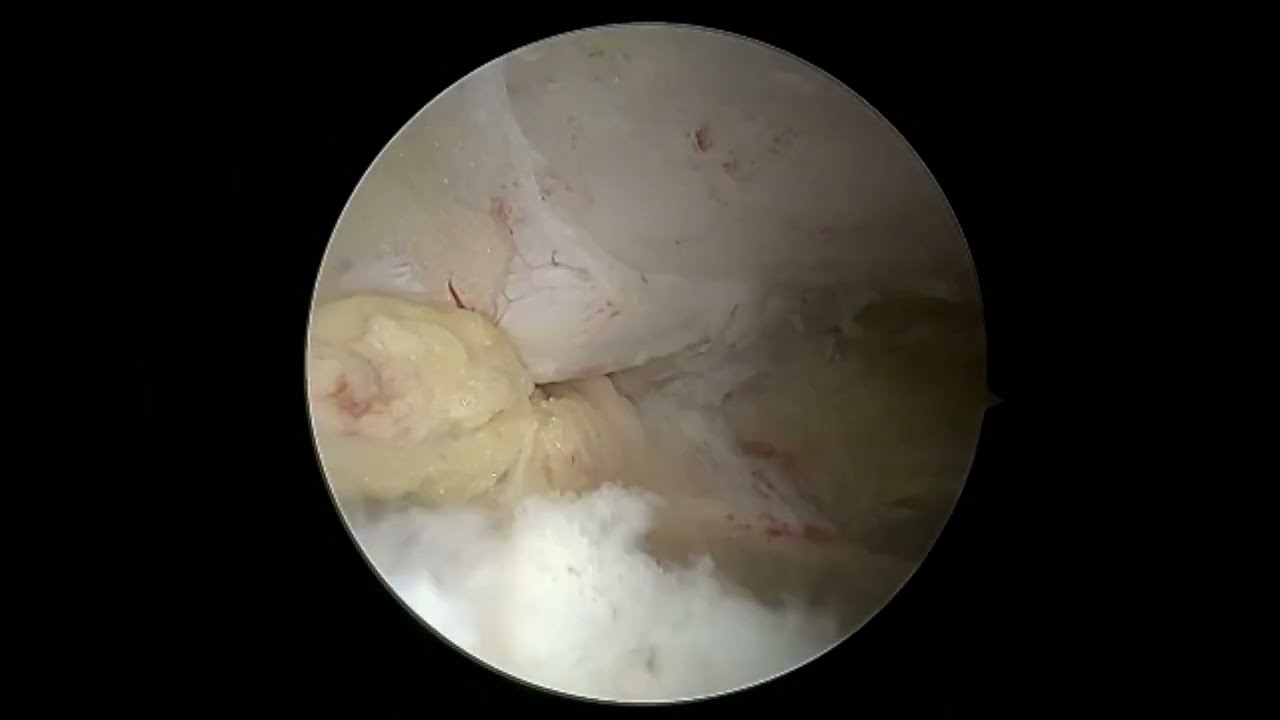

This video showcases Dr. Grant Garcia demonstrating his specialized technique for an arthroscopic revision anterior shoulder stabilization. This operation is performed on patients who have recurrent anterior shoulder dislocations despite having already undergone a previous stabilization surgery (such as a prior Bankart repair).
Revision cases are technically challenging because the surgeon must navigate around altered tissue planes, scar tissue, and previously implanted hardware.
The procedure is executed through the following key clinical phases:
- Navigating Around Old Hardware: Dr. Garcia arthroscopically enters the joint and identifies the remnants of the previous repair. He assesses whether the previous anchors were misplaced or if they have backed out. In many cases, bio-composite or metal anchors are left in place if they are deep, or safely tunneled through if necessary, while any loose or non-absorbable suture remnants are cleared out.
- Aggressive Tissue Mobilization: The critical step in a successful revision is completely freeing the anterior labrum and the attached inferior glenohumeral ligament (IGHL) complex from the neck of the bone where it has scarred down abnormally. Using arthroscopic elevators and tissue liberators, Dr. Garcia painstakingly dissects the tissue until it is highly mobile and can be shifted back upward.
- Meticulous Glenoid Rim Preparation: To stimulate optimal biological healing for a second time, a high-speed mechanical shaver and an arthroscopic rasp are used to aggressively abrade the front edge of the socket bone. This creates a fresh, highly vascular bone footprint.
- Strategic Anchor Placement & Tissue Shift: New, high-strength suture anchors are drilled and placed into pristine, untouched areas of the glenoid bone rim. Dr. Garcia uses advanced suture-passing tools to grasp deep, healthy segments of the lower joint capsule and labrum. When these sutures are tensioned down, they shift the stretched-out capsule upward and compress it tightly against the bone bed.
The final evaluation demonstrates a robust, thick tissue bumper rebuilt at the front of the joint socket, taking up the slack from the redundant capsule to establish maximum structural defense against future dislocations.