

 Book An Appointment



Biceps Tendon Transfer 2025
Dr. Garcia specializes in complex knee, shoulder and elbow sports surgeries. He has prepared a number of surgical videos below to help patients better understand their procedures. He is frequently updating his surgical video database so check back soon for further updates.
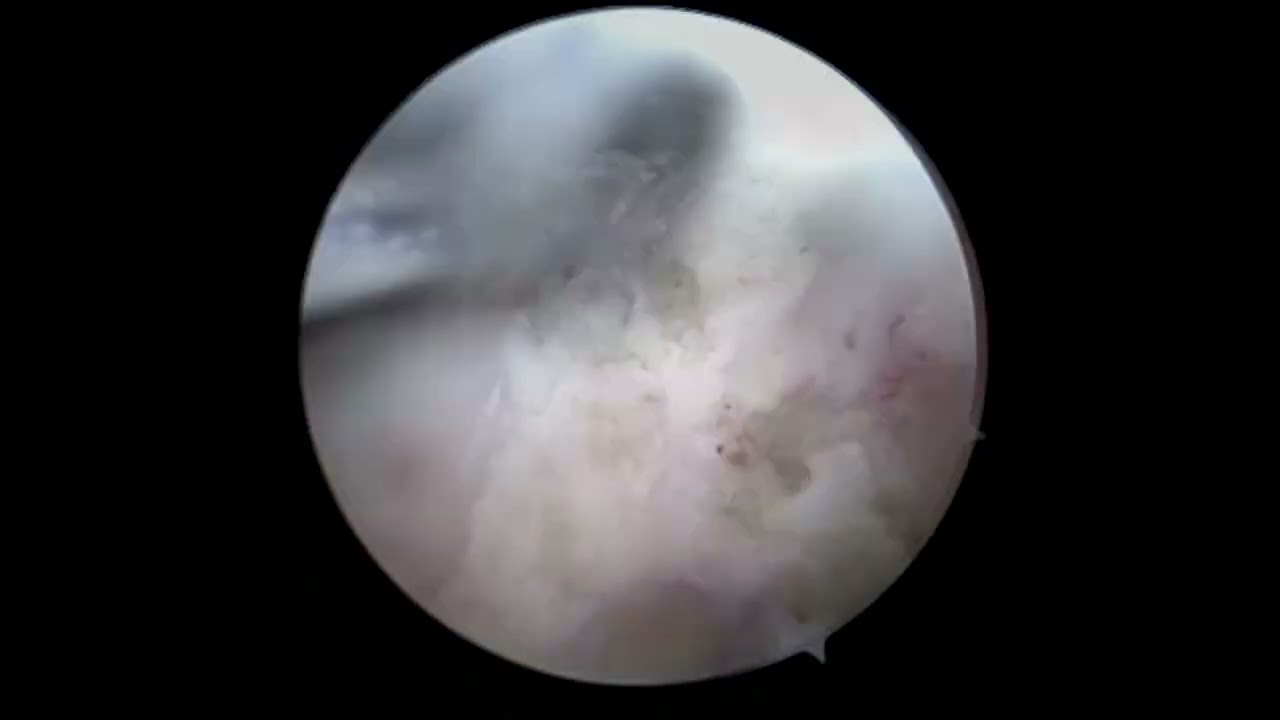

This video features Dr. Grant Garcia demonstrating his refined surgical technique for an arthroscopic biceps tendon transfer (rerouting) to augment a chronic, retracted rotator cuff repair.
This procedure is highly indicated for young, active patients who present with structural atrophy and severe retraction of the rotator cuff tendon, but whose long head of the biceps tendon (LHBT) is still intact. Instead of letting a fragile, thinned-out cuff repair fail, Dr. Garcia leaves the biceps attached to its native socket anchor and reroutes the tendon body completely out of its groove. This turns the biceps into a biological reinforcement sheet that acts as a humeral head suppressor—preventing the arm bone from migrating upward—while introducing thick, vascular tissue to aid healing.
The procedure is executed through the following primary clinical phases:
- Biceps Isolation & Groove Decompression: Dr. Garcia begins by extensively decompressing the bicipital groove and cleaning out localized inflammation. Thorough decompression is vital to eliminate chronic groove-related friction and post-operative pain.
- Centrally Placed Anchor Stabilization: A double-loaded, knotless FiberTack anchor is inserted low and centrally into the bone footprint. Dr. Garcia loops these high-strength sutures directly around the mobile biceps tendon, wrapping and securing it so that it is permanently pulled completely out of the bicipital groove and transposed directly over the exposed humeral bone bed.
- Double-Row SpeedBridge Construct: To repair the retracted cuff tissue over this newly created biceps bed, a standard double-row construct is built. Dr. Garcia elects to use specialized SwiveLock ("silver lock") anchors due to concerns regarding local bone quality.
- Posterior & Anterior Medial Rows: Anchors are placed on both the front and back edges of the footprint. High-strength fiber tapes and stay sutures are passed through the thinned-out cuff tissue.
- The "Rip-Stop" Configuration: Dr. Garcia meticulously weaves and ties these medial suture lines to form a structural "rip-stop" barrier. This prevents the high-tension suture tapes from slicing through the fragile, atrophic muscle fibers when the construct is tightened.
- Sequential Tensioning & Reduction: With the arm held in an abducted and externally rotated position, the medial rows are sequentially knotted. This counteracts the tendency of the chronic cuff to pull pathologically backward and upward.
- Lateral Row Crossover: The remaining suture and fiber tape limbs are crossed over the flattened biceps tendon in a crisscross fashion. They are driven into lateral-row anchors, compressing both the native rotator cuff and the transposed biceps tendon flat against the humeral bone footprint.
- Biologic Optimization via PRP: After achieving a stable, flat reconstruction with zero tissue "dog-ears," Dr. Garcia switches the arthroscope to dry visualization (removing all arthroscopic joint fluid). He injects the patient's pre-spun Platelet-Rich Plasma (PRP) directly into the repaired tendon interface to reduce post-operative pain and stimulate long-term tissue-to-bone healing.
The final visualization shows a highly robust, double-row construct. The structurally weak native cuff is entirely backed by the living biceps tendon canopy, which successfully restores joint mechanics and provides an optimal environment for biological remodeling.