

 Book An Appointment



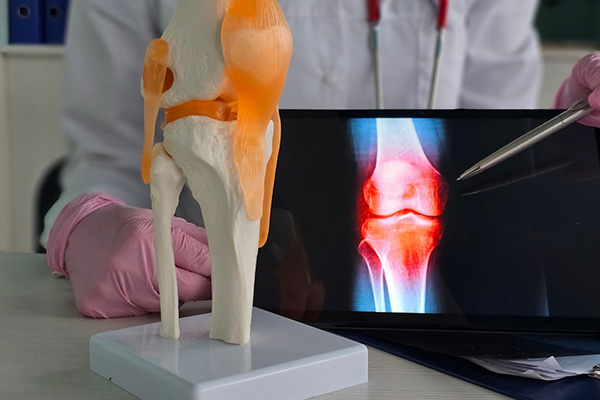
Cartilage damage can turn everyday movement into a source of pain, especially when walking, climbing stairs, or participating in sports becomes increasingly difficult. Unlike many tissues, damaged joint cartilage has limited natural healing capacity, which can allow symptoms to persist. Cartilage restoration aims to repair or replace damaged areas while preserving as much of the natural joint as possible. For patients in Seattle, Bellevue, Everett, and Kirkland, understanding cartilage restoration can help clarify available treatment options.
What Is Cartilage Restoration?
Cartilage restoration is a group of orthopedic procedures designed to treat localized areas of damaged or missing articular cartilage. Articular cartilage covers the ends of bones inside joints, allowing them to move smoothly while helping absorb and distribute loads.
When cartilage is damaged through sports injuries, trauma, repetitive stress, or other causes, patients may experience pain, swelling, stiffness, catching, or reduced activity tolerance.
Rather than replacing the entire joint, cartilage restoration focuses on addressing specific areas of cartilage damage. The goal is to preserve the patient's existing joint and, when appropriate, delay or avoid more extensive procedures.
Who May Benefit From Cartilage Restoration?
Cartilage restoration is not appropriate for every patient with knee pain or arthritis. It is generally more relevant when there is a focal cartilage defect rather than widespread deterioration throughout the joint.
Age, activity level, overall joint health, alignment, ligament stability, and the size and location of the cartilage defect can all influence treatment decisions.
For active patients in Seattle and surrounding communities, preserving the native joint can be an important consideration when cartilage damage is localized and other structures of the knee remain suitable for restoration.
What Cartilage Restoration Procedures Are Available?
Several techniques may be used depending on the patient's specific injury.
MACI: Matrix-induced autologous chondrocyte implantation uses a patient's own cartilage cells to help restore a symptomatic cartilage defect. The technique may be considered for selected cartilage injuries of the knee.
Microfracture: This procedure creates small openings in the underlying bone to stimulate a healing response. It may be appropriate for certain smaller cartilage defects.
Cartilage transplantation: Donor cartilage can sometimes be used to replace damaged cartilage and restore the affected joint surface.
Osteotomy: In patients whose leg alignment places excessive stress on a damaged portion of the knee, an osteotomy may be performed to redistribute forces. It can sometimes be incorporated into a broader joint-preservation strategy.
Our specialty in sports medicine and cartilage restoration includes procedures such as MACI, cartilage transplantation, meniscal transplantation, and osteotomies. The appropriate approach depends on the individual patient's anatomy and injury rather than a single standard procedure.
How Is Cartilage Damage Diagnosed?
Diagnosis begins with a medical history and physical examination. Patients may describe pain with activity, swelling after exercise, catching, or a gradual reduction in their ability to participate in sports.
Imaging can provide additional information. X-rays may help evaluate bone structure and joint alignment, while MRI can provide detailed information about cartilage, menisci, ligaments, and other soft tissues.
Understanding the entire joint is important because cartilage restoration may be less successful when significant arthritis, instability, or abnormal alignment remains unaddressed.
What Is Recovery Like After Cartilage Restoration?
Recovery depends heavily on the procedure performed and the location and size of the cartilage defect. Some patients need a period of protected weight bearing or restrictions on certain activities while the treated area heals.
Physical therapy typically plays an important role. Rehabilitation may begin with controlled range-of-motion exercises before progressing to strengthening, balance, and functional activities.
Returning to running or competitive sports can take considerably longer than returning to basic daily activities. Patients should follow the rehabilitation plan provided by their orthopedic and therapy teams rather than using pain alone to determine when an activity is safe.
How Does Cartilage Restoration Compare With Joint Replacement?
The two approaches have different goals. Cartilage restoration attempts to preserve the patient's natural joint by treating localized cartilage damage. Joint replacement removes and replaces damaged joint surfaces and is generally considered for more advanced or widespread joint degeneration.
For an appropriately selected patient, cartilage restoration may offer a joint-preservation option. However, it is not a substitute for joint replacement in every situation. The extent of cartilage loss, overall arthritis, alignment, age, activity level, and other factors must be considered.
Frequently Asked Questions
What is cartilage restoration surgery?
Cartilage restoration surgery is a group of procedures used to repair or replace damaged areas of joint cartilage. Techniques can include MACI, cartilage transplantation, and microfracture, depending on the patient's specific cartilage defect.
Can damaged knee cartilage grow back?
Articular cartilage has limited ability to heal on its own. Some cartilage restoration procedures are designed to stimulate repair or introduce cartilage cells or tissue into a damaged area, but outcomes depend on the individual injury and joint condition.
Am I a candidate for cartilage restoration?
Potential candidates typically have a localized cartilage defect and otherwise suitable joint conditions. Factors such as age, activity level, defect size, alignment, ligament stability, and the presence of arthritis influence whether restoration is appropriate.
How long does it take to recover from cartilage restoration?
Recovery varies significantly depending on the procedure. Some patients require weeks of protected activity followed by progressive rehabilitation, while returning to higher-impact sports can take several months or longer.
Is cartilage restoration better than knee replacement?
Neither is universally better. Cartilage restoration is intended primarily for selected patients with localized cartilage damage and aims to preserve the natural joint. Knee replacement may be more appropriate when joint damage or arthritis is extensive.
Exploring Joint-Preservation Options in the Seattle Area
Cartilage restoration requires careful patient selection and an understanding of the entire knee, not simply the damaged cartilage. Patients in Seattle, Bellevue, Everett, and Kirkland experiencing persistent knee pain can discuss their symptoms and imaging with an orthopedic sports medicine specialist to determine whether joint-preserving treatment may be appropriate.
Grant H. Garcia, MD is a board-certified, fellowship-trained orthopedic surgeon specializing in sports medicine, shoulder surgery, knee preservation, and cartilage restoration. He serves patients throughout the Seattle, Bellevue, Everett, and Kirkland areas, helping athletes and active individuals recover from injuries and return to the activities they enjoy. Dr. Garcia completed advanced training at Hospital for Special Surgery and Rush University Medical Center and is recognized for his expertise in minimally invasive arthroscopic procedures, ACL reconstruction, meniscus repair, shoulder instability, and joint preservation techniques.